
Combustion driven shock tunnel: Flows can be generated at Mach number ranges between 5-12 with Enthalpy levels upto 6 MJ. Both reflected and straight modes are possible, and can be used to study moving shock problems.
Research in Aerodynamics, Flight Dynamics & Control addresses the fundamental and applied aspects of aerospace vehicle motion and fluid-vehicle interaction. The domain encompasses aerodynamics, flow physics, flight dynamics, guidance and control, and autonomous systems, with applications spanning aircraft, helicopters, and unmanned aerial vehicles. Research integrates analytical, computational, and experimental approaches to advance the performance, stability, and autonomy of aerospace systems.

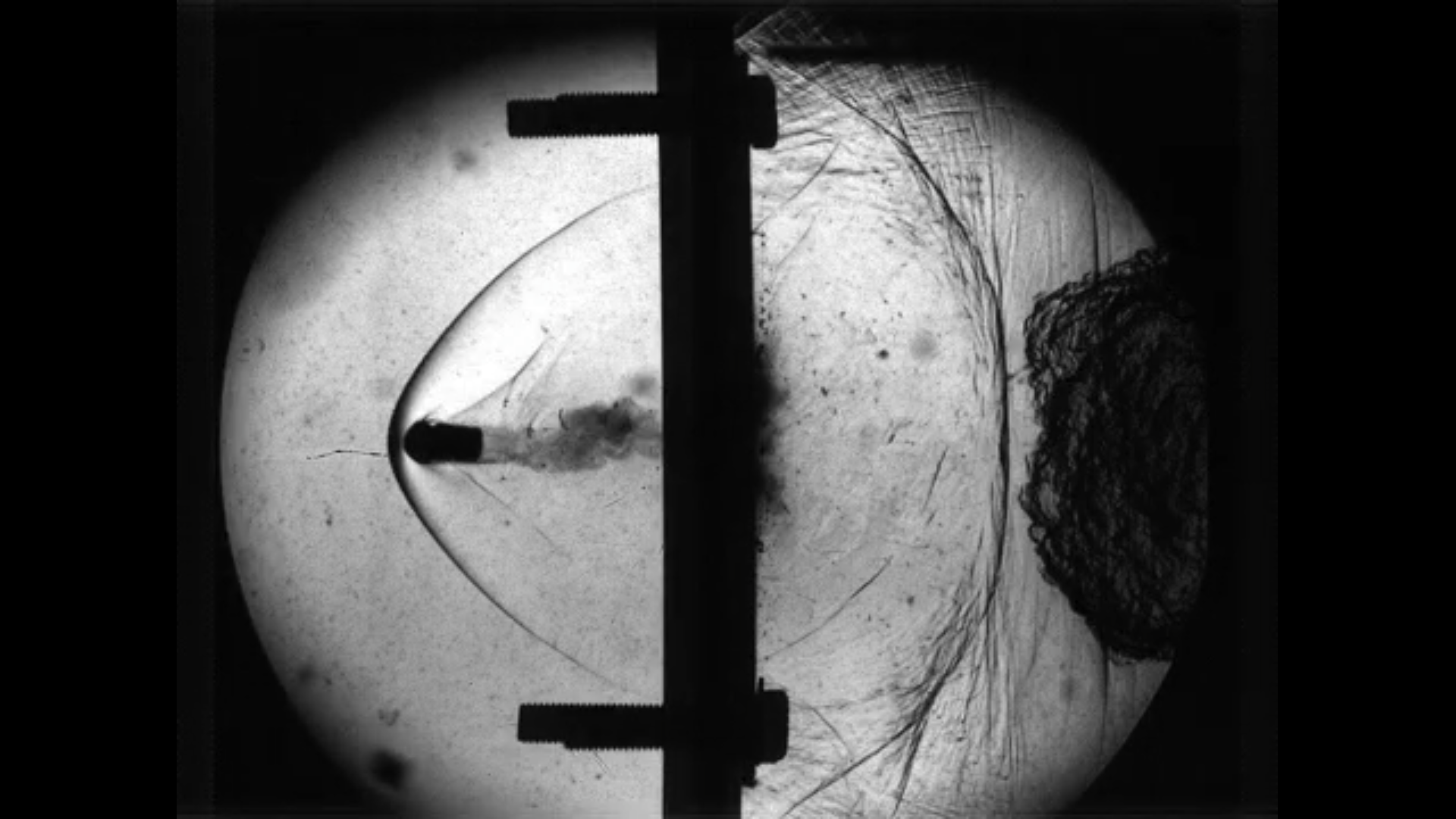
Combustion driven shock tunnel: Flows can be generated at Mach number ranges between 5-12 with Enthalpy levels upto 6 MJ. Both reflected and straight modes are possible, and can be used to study moving shock problems.
Supersonic wind tunnels: Free jet facility that can operate at supersonic speeds ranging from Mach number of 1.5-3.6
Compressor: A 2-stage reciprocating water cooled type compressor operated by a 90 kW motor with a maximum discharge of about 510 m3/hour
Supersonic combustion facility
Facility for oscillatory combustion response of premixed flames
Instruments
Low density tunnel: Only one of its kind in South-East Asia and can simulate high altitude flow conditions covering continuum to transitional flow regimes.
Transonic wind tunnel: Induction type self-correcting tunnel that can operate at a Mach number range of 0.8-1.2
Air reservoirs: Three reservoirs with a capacity of 12 m3, with maximum pressure of 1750 kN/m2 Strut based mixing enhancement facility: Operates at supersonic mach number with the option to change test sections
Cavity based flame holding facility
Diagnostic Techniques and Instruments